
This was my previous post about my earliest exposure to “Home Care” in Ontario. It references an even earlier post about my experiences as an inpatient at one of Toronto’s busiest general hospitals, the Mt. Sinai – my favourite.
Now, since this all began, Ontario’s Patient Ombudsman has had a look at the situation. I tried to contact them repeatedly and got exactly no help. It was disappointing but frankly, not surprising. While they’ve released a scathing report today, what the Minister suggests is a crisis resolved, is not. It is simply untrue to suggest that supplies are no longer restricted or are available when you need them. Certainly not my experience at all.
Patient Ombudsman’s Media Release on Report
And the Actual Report here
Patient Ombudsman’s Report on Home Care Medical Supplies Disruption
Here is the Toronto Star covering the new Report
Ombudsman slams Health atHome’s bungling of supply shortages
I will reproduce the text of the article below. But in it, there is a suggestion that: “The access and distribution of medical supplies is now stabilized”. That’s according to a spokesperson for the Ministry of Health.
Well, I am here to say that trying to get the supplies we needed, was excruciating and we have borne the cost to a great degree, for which we will never be reimbursed.
My Story
On July 10 I had surgery at the Sinai. That operation resulted in a wound that was approximately 11 cm long, 5 cm wide and nearly 8 cm deep on a part of my body that meant it was hugely vulnerable to infection and enormously painful, restricting every aspect of my life – rendering me effectively house-bound. For at least the foreseeable 2-3 months, I learned at the clinic……and they were not wrong.
On discharge from the hospital, I had been promised home care but that was really attendance required at Women’s College Hospital daily. The problem was that my wound required dressing and changing more like 5-6 times a day, rather than the suggested once daily, and getting there was difficult and stressful in the early days particularly. So we had to learn how the heck to do this at home even while getting to the hospital every day was critically important. We still also had to do the work actually at home – by ourselves. And figure out how to buy our own supplies online – thank you Amazon!
My wound needed to be packed with gauze that would help prevent and fight infection. At first they didn’t have any, then not enough – I spent maybe a dozen hours advocating to get what I needed in stock. Once that got “resolved” though different things popped up. Wounds change in character and require different supplies as things progress, sometimes, as in my case, very quickly. We were again on our own for a whole lot of all this – too much. Although on the upside, we have become experts on wound care and supply needs!
St. Elizabeth’s at Women’s College is working under third world conditions — it is like a MASH outfit there, a war zone. Let me be clear that the NURSING is fantastic. But their work is hampered by an utter lack of supports, resources, scarcity of supplies and administrative burdens due to a failure to modernize. They’re back in the 60s/70s with infrastructure.
They are doing paper charting even tho it’s a wound care clinic – photos would make all the difference. They’re spending all their time charting their observations of a wound when digital access to a pic of the thing would mean saving precious minutes and getting a much more accurate picture, literally, of what’s happening.
There is no patient care co-ordination or effective communication between service providers.
Booking appointments is through the phone, generalized intake number, and they must put you through to your location or pass on a message. The phone lines are only available during business hours, there is no way to leave a message otherwise or at any other time. There is zero access to email. There are no names, email addresses, or even vm numbers for anyone in charge. The poor chap at reception for the clinic hand-writes your appointment times on little cards but when he runs out of them, often, he puts them on a yellow post-it note. IN 2025!!
Although my main presenting issue has now largely resolved, due to exceptional nursing care and our financial ability to spring for supplies they continue to lack or be short on, I’ve developed a complication and therefore still have to attend there for care, though not daily as before – but the new issues present new problems in sourcing supplies.
Not two days ago, they didn’t have the particular thing I now need. We once again rushed delivery of the purchase off the internet to our home – it is never ending and unbelievably stressful. When you’re recovering from a massive trauma to your body, coupled with a long and painful recovery, this all takes a mental toll on your emotional health. I have a partner who somehow, god bless him, was up to this task. But if you’re alone or poorer than we are, you’re dead.
My heart breaks for the staff at the clinic. They are dedicated professionals and provide exceptional nursing and wound care – ie. specialist care. They are unnecessarily weighed down by bureaucracy and inaccessible supports that exist in health care elsewhere, shortage of supplies that does continue and an utter failure to modernize the infrastructure – computers, electronic charting, voicemail systems, email, a booking system online, digitalization of whatever can be modernized – all missing in action. This all leaves them doing a job the hardest way possible. Patient care is impeded at every turn and through no fault of the staff, which clearly experience massive rapid turn-over, which of course compromises continuity of care.
“Home Care” in Ontario is a disgusting heap of misery and I do not wish it on my worst enemy.
Here is the Toronto Star article referenced above, available at:
Ombudsman slams Health atHome’s bungling of supply shortages https://www.thestar.com/business/ontario-patient-ombudsman-report-slams-health-athomes-bungling-of-medical-supply-shortages/article_5253b701-0a96-4ccf-ac55-ebb2eda1526b.html
Ontario Patient Ombudsman report slams Health atHome’s bungling of medical supply shortages
Report points to a ‘lack of effective oversight’ last fall when patients and caregivers reported shipments of medical supplies and pain-relief drugs arriving late — and sometimes, not at all.

By Ana PereiraBusiness Reporter
Ontario’s Patient Ombudsman has found that a massive shortage of critical medical equipment for patients receiving care at home is the result, in part, of complacency by the provincial agency supposed to oversee the distribution of medical supplies.
According to a report released by the Patient Ombudsman’s office on Wednesday, the timing of the shortage that began in September 2024 coincided with Ontario Health atHome’s changes to contracts with suppliers of home care tools.
At the time, patients and their caregivers reported that shipments of medical supplies were arriving late or, sometimes, not at all.
Doctors said that the shortages also affected pain-relief drugs and some medical-assistance-in-dying (MAID) kits, which were showing up incomplete.
While the ombudsman’s report recognizes that Ontario Health atHome should have been able to rely on the contracts signed with suppliers, it determined that the provincial agency is accountable for failing to ensure the care of patients during the supply-chain disruption.
“The Patient Ombudsman observed a lack of focus on the potential impact on patients and their care,” the report read. “Patient Ombudsman did not observe significant engagement with patients or caregivers during the modernization process.”
Ontario Health atHome CEO fired following home-care medical supply shortage
The report also stated there was “significant lack of effective oversight” by Ontario Health and Ontario Health atHome when they revamped procurement and delivery systems in the province.
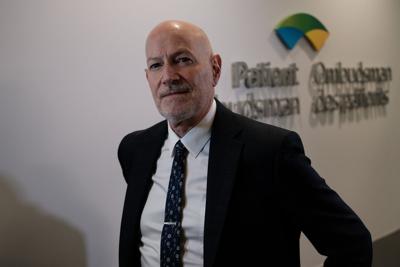
“Home care is a critical health service and when a disruption leads to patients not getting care, we all lose confidence in the health care system,” Patient Ombudsman Craig Thompson said in the report. “This investigation shines a light on how the disruption directly impacted the health and well-being of patients’ and created hardships for caregivers and providers.”
The crisis culminated in the firing of former Ontario Health atHome CEO Cynthia Martineau in January.
“Last fall’s supply delivery distribution was unacceptable,” Ema Popovic, spokesperson for Ontario’s Ministry of Health, said in an emailed statement to the Star. “Ontario Health atHome failed in its basic responsibility to patients, caregivers and families.”
Popovic said Minister Sylvia Jones took “immediate action” to direct the chair and former CEO of Ontario Health atHome to use “every resource” to resolve the issue while ensuring it doesn’t happen again.
The access and distribution of medical supplies is now stabilized, she added.
“Along with new leadership at Ontario Health atHome and additional mechanisms in place,” Popovic said, “Ontario Health atHome will continue to strengthen their delivery of connected home care services across the province.”
Ontario Health deferred questions to Ontario Health atHome.
Ontario Health atHome did not respond to specific questions from the Star, but apologized for the disruptions in a statement published on its website.
He was left on the hospital floor for hours. His family has lodged a complaint with Ontario’s Patient Ombudsman. It’s just one of thousands
“We deeply regret any distress or suffering endured by you, your loved ones, and your care providers who were unable to help you as they wanted to without the necessary supplies,” Anna Greenberg, interim CEO of Ontario Health atHome, wrote in a statement.
“Ontario Health atHome remains fully committed to learning from this experience and to continually improving so that the patients we serve receive the high-quality home and community care they need and deserve.”
Greenberg said that, over the past year, the agency has conducted a comprehensive review of its medical equipment and supply processes and implemented key improvements.
The Patient Ombudsman is requiring Ontario Health atHome to respond to the recommendations laid out in the report within the next 90 days, saying it will check with the agency every six months until the recommendations are fully implemented.
Ana Pereira is a business reporter for the Star, based in Toronto. Reach her via email: anpereira@thestar.ca


 anitaszigeti