
I recently stumbled across this video of a book launch event I spoke at nearly exactly 10 years ago.
The Business of Madness is a very important book and Bonnie was an iconic advocate for psychiatrized persons – “consumer / survivors” in the parlance of the era epitomized by Bonnie Burstow, Don Weitz and Carla McKague.
All have left us now, sadly, but I was fortunate to be the new kid on the block while they led the movement and I was able to learn so much from them, that to this day informs my work representing persons living with serious mental health issues.
At this book launch at about the 10 minute mark, I talk about why the book is so significant from a legal perspective. Bonnie had observed many hearings of Ontario’s mental health tribunals herself and critiques their proceedings from her informed and academic perspective as well as the critical view of someone who identified as a survivor.
What I find a bit fascinating now is how evident my ultimately abolitionist views are at 17:14 of this video when asked this
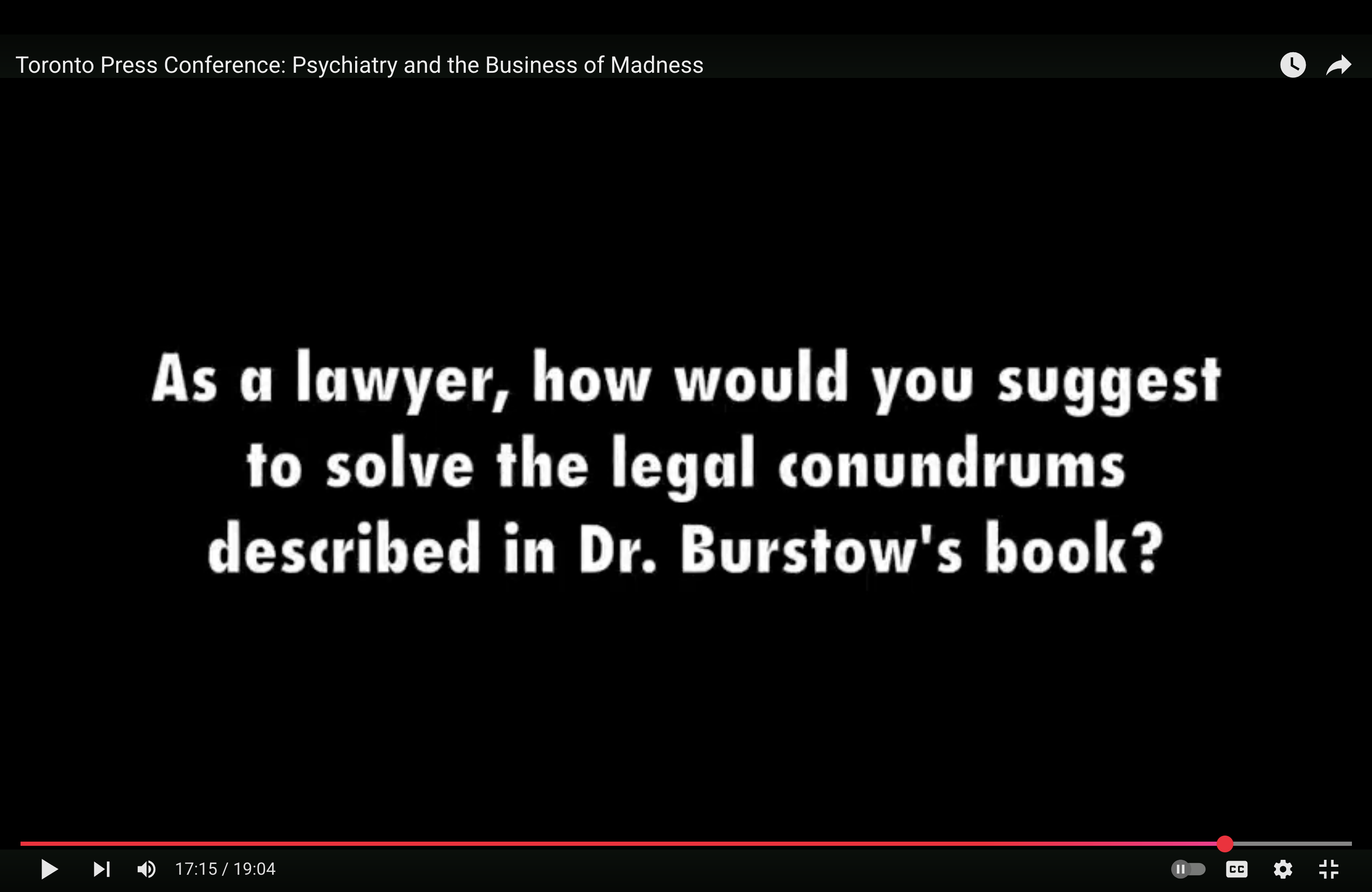
My views have not changed in the last decade, apparently.
I still say that the tribunal system in Ontario is deeply flawed and in the case of our civil mental health review system, likely fatally flawed.
Civil commitment proceedings ought to go before a Superior Court Judge and the case for depriving someone of their liberty, in the absence of criminal allegations, should be proven by the State.
One doctor signing a piece of paper to rob an individual who has done nothing wrong of their liberty is not a fully fair system.
I thought that when I did my first Consent and Capacity Board hearing in 1995 and I think that today.
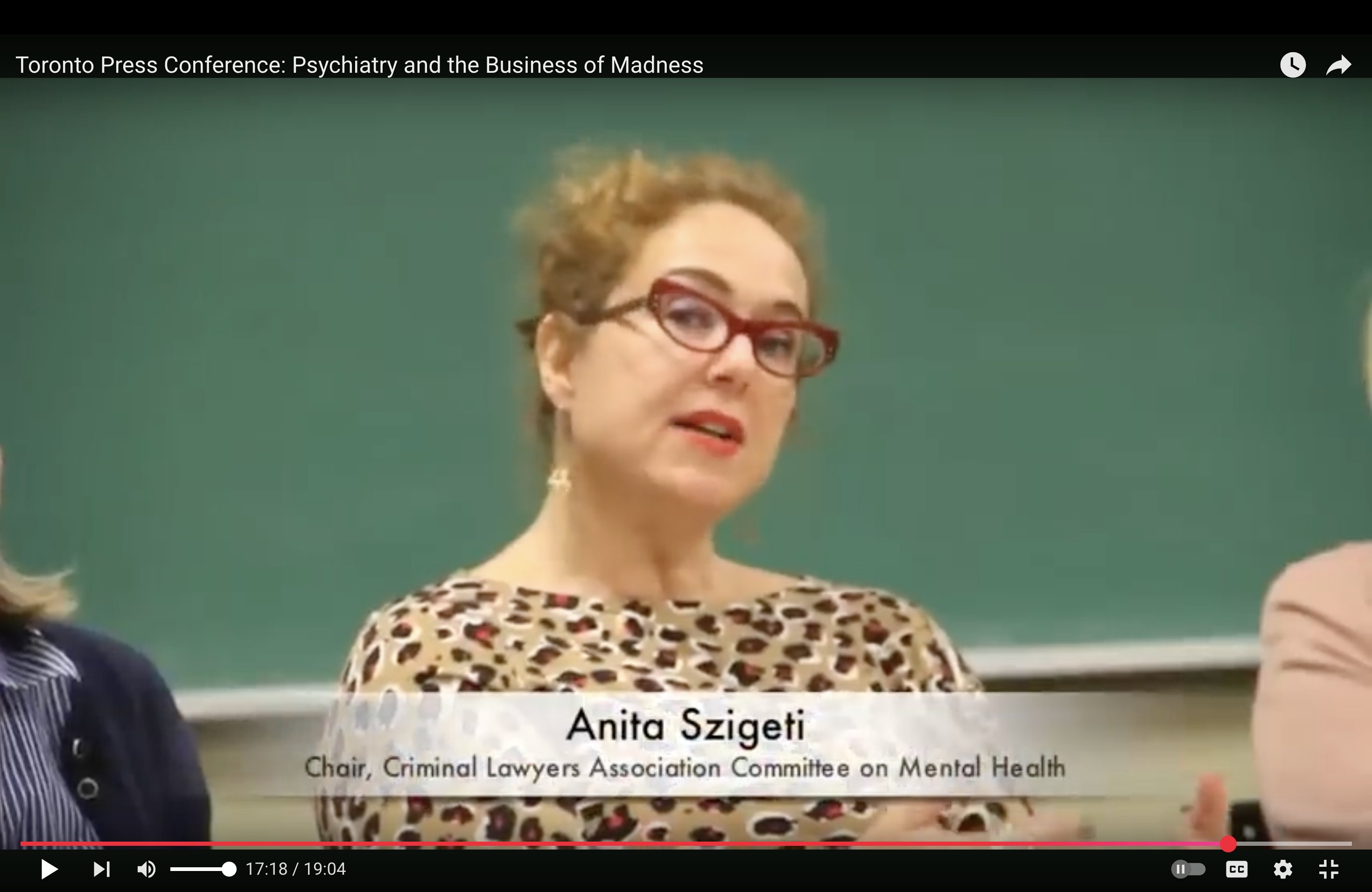
This year marks 30 years since I started doing the work of mental health litigation and in many ways too little has changed.
BUT, not for lack of trying. When I retire, I’ll have left it all in those hearing rooms and court rooms.
That’s at least something. Probably. Maybe. It is what it is – but more is for sure left to be done!


 anitaszigeti