
This case has a pub ban so it will not be live streamed albeit there is some chance a video may become available once reviewed and edited.
Should the archived video be made public, it will be available here when it’s ready to post after the hearing only:
https://www.scc-csc.ca/case-dossier/info/webcast-webdiffusion-eng.aspx?cas=40956

The Judgments below in this case reveal some troubling facts and findings.
Lots of good lawyers on this one – the Appellant’s Factum, written by Erin Dann and Paul Socka is really great.
Excellent intervener facta also.
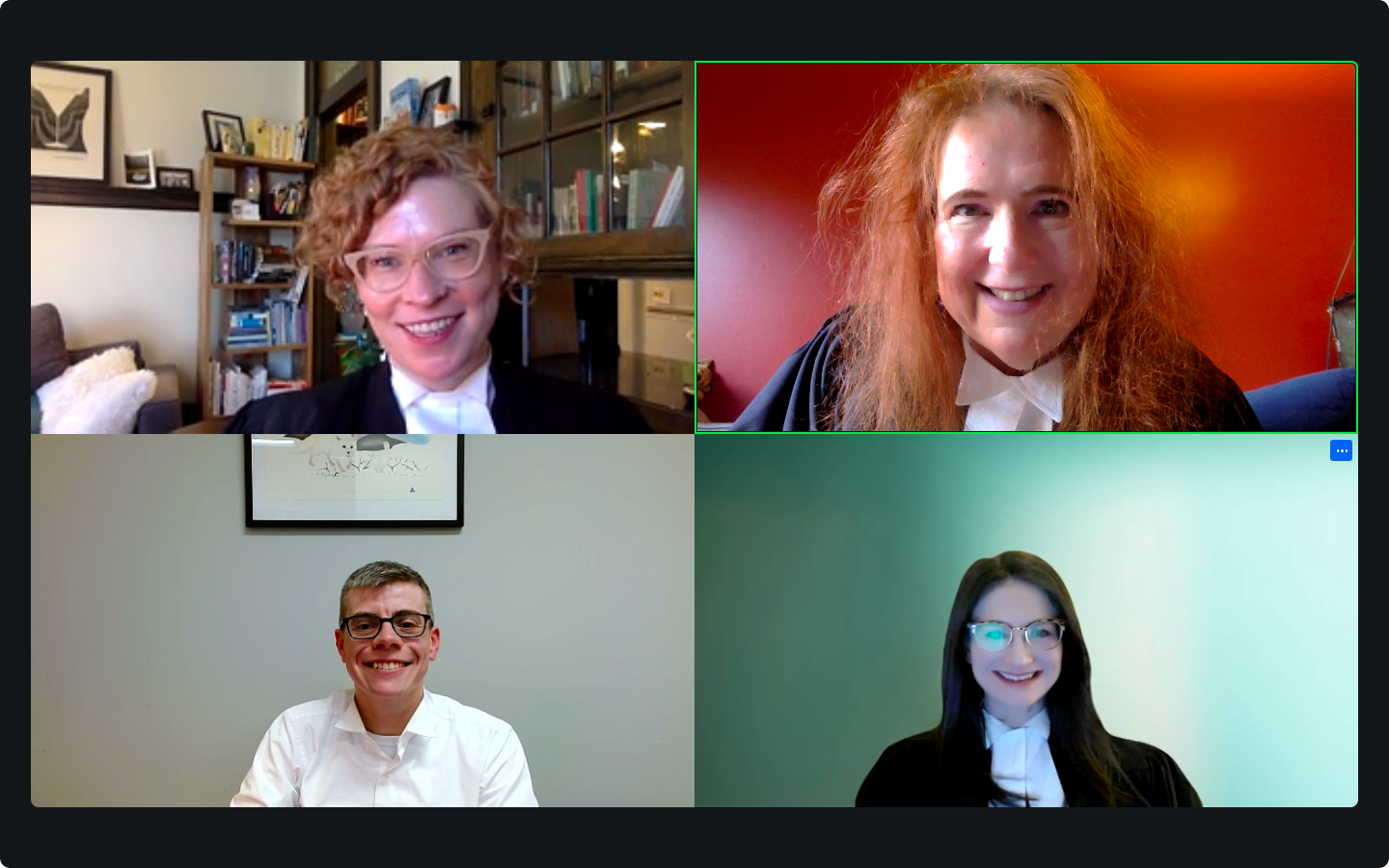
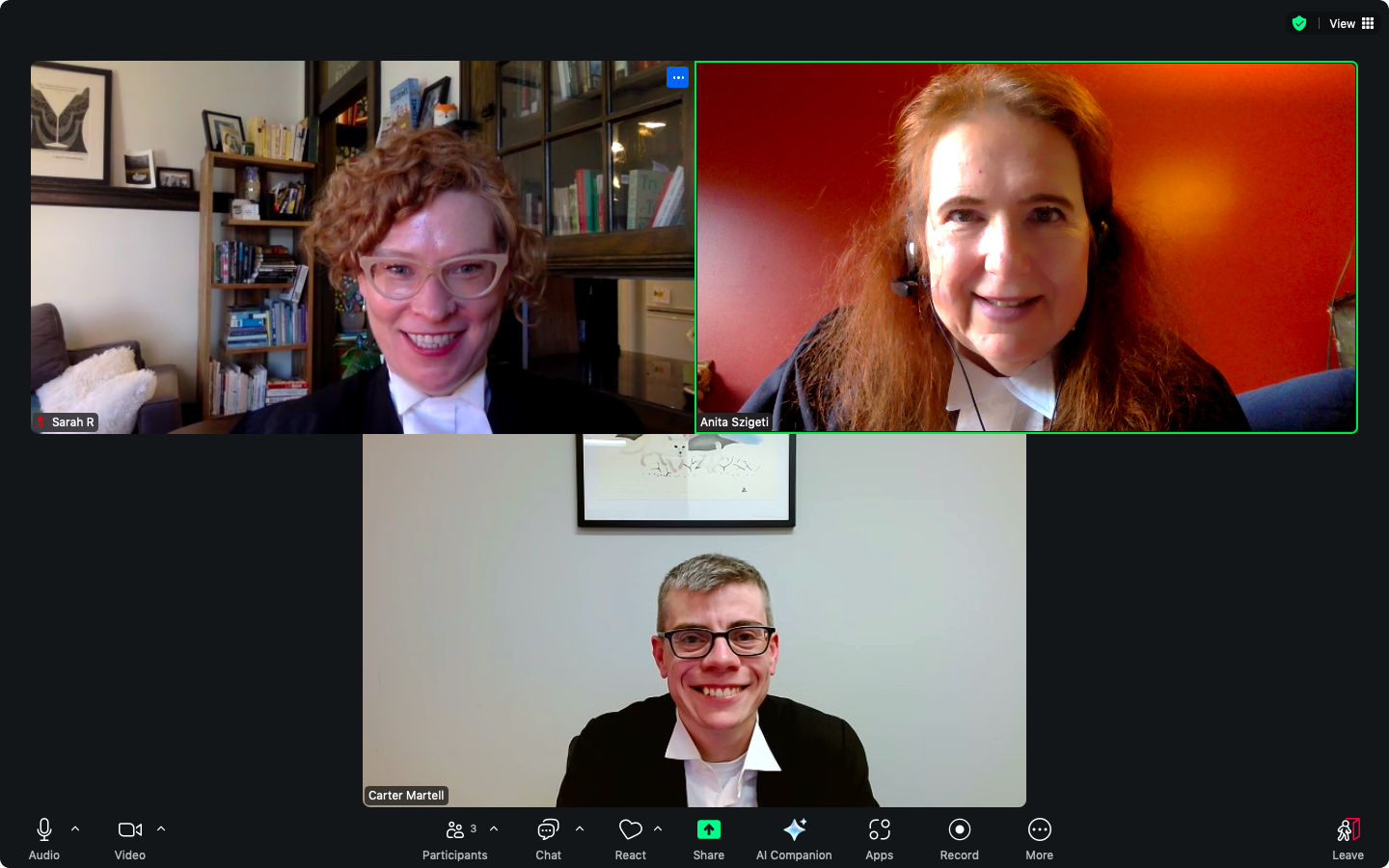
Our counsel team for our client the Empowerment Council this time is Sarah Rankin (Calgary, Alberta), Dr. Ruby Dhand (Kamloops, B.C.) and Shira Brass (Ottawa, Ontario) + me.
Here is a link to our Factum:
You can check it all out on the Court’s website.
Case INFO SCC 40956
https://www.scc-csc.ca/case-dossier/info/sum-som-eng.aspx?cas=40956
FACTUMS JW SCC
https://www.scc-csc.ca/case-dossier/info/af-ma-eng.aspx?cas=40956
SUMMARY JW SCC
https://www.scc-csc.ca/case-dossier/info/sum-som-eng.aspx?cas=40956
Here is the formal summary
J.W. v. His Majesty the King
(Ontario) (Criminal) (By Leave)
(Publication ban in case)
Keywords
Criminal law — Sentencing — Whether anticipated time to complete rehabilitative programming may be considered when determining length of custodial sentence outside of dangerous offender regime — Whether delay caused by offender is wrongful conduct justifying denial of enhanced custodial credit — Whether offenders detained in mental health facilities prior to sentencing entitled to enhanced credit for those periods
Summary
Case summaries are prepared by the Office of the Registrar of the Supreme Court of Canada (Law Branch). Please note that summaries are not provided to the Judges of the Court. They are placed on the Court file and website for information purposes only.
(PUBLICATION BAN IN CASE)
The appellant, an Indigenous man with significant cognitive difficulties, repeatedly sexually assaulted a worker at the group home where he resided. He remained in custody pending trial, including a period of detention in a psychiatric facility while temporarily unfit to stand trial. After resiling from three agreements to plead guilty, the appellant did so the fourth time. From charge to conviction, nearly four years elapsed.
The sentencing judge imposed a nine-year custodial term. This term was lengthier than the one requested by the appellant, in part because his cognitive difficulties increase the amount of time required for rehabilitative programming. The sentencing judge considered the appellant’s repeated abandonment of agreements to plead guilty to be wrongful conduct and disallowed enhanced pre-sentence custodial credit for part of the appellant’s detention. The sentencing judge also relied on the relatively favourable conditions of detention in the psychiatric facility as a basis to deny enhanced credit.
The Court of Appeal allowed an appeal in part, due to an error in calculating the number of days the appellant spent in custody, but otherwise dismissed the appeal. It found that the length of time required to complete rehabilitative programming was one of multiple factors that the sentencing judge considered, and that she was entitled to do so. Furthermore, there was an evidentiary basis to conclude that the appellant’s repeated abandonment of guilty pleas was wrongful conduct, and that the appellant’s conditions of detention did not warrant enhanced credit for his entire period of pre-sentence custody.
Lower Court Rulings
April 14, 2022
Ontario Superior Court of Justice
Sentenced to nine years’ imprisonment.
August 17, 2023
Court of Appeal for Ontario
Appeal allowed in part. Date modified:2016-05-02
- In our Factum for the Empowerment Council we argue, among other things, this – in our overview of our Submissions:
PART I — OVERVIEW AND FACTS
- The Empowerment Council, Systemic Advocates in Addictions and Mental Health [“the EC”] is an Ontario organization advocating on behalf of persons with addictions and mental health issues, including those detained in forensic psychiatric facilities while undergoing assessments or after being found unfit to stand trial or not criminally responsible [“NCR”]. This Court’s consideration of how pre-trial credit is awarded to individuals with serious mental health issues detained in psychiatric hospitals pending their conviction and any motive attributed to their decisions while conducting their defence should take into account the reality of the lived experience of EC’s constituents.
- Criminal defendants are disproportionately likely to experience emotional, cognitive and/or mental health issues, and addictions, which can significantly impair their ability to maintain a functioning relationship with counsel. In the absence of unequivocal evidence that a defendant’s change(s) of counsel are willful acts of delay, trial judges should refrain from attributing a motive for those changes to the defendant.
- Sentencing judges must scrupulously avoid stereotyped, discriminatory or paternalistic reasoning about people living in poverty and/or instability due to mental health, addiction or emotional issues. Reasoning that presumes or implies that these defendants are better off in psychiatric detention both offends their dignity and ignores the reality of such detention. This Court must ensure that psychiatric detention is treated as the severe and traumatic liberty deprivation it is, and that considerations of the impact of such detention are informed by the relevant jurisprudence including Coroners’ inquests’ applicable determinations.
- The EC also urges this Court to instruct trial judges to avoid presuming psychiatric detention is less harsh than remand detention. Forensic psychiatric detention is primarily focused on security, rather than on treatment or care. Those detained in forensic facilities may face more restrictive conditions than those in remand centres, and with less oversight and fewer protections.
Anita Szigeti

NB – I get a veritable avalanche of email daily – my response times are variable and I beg your patience. If this is a file-related matter, write to me at anita@asabarristers.com which is monitored by my assistant leanne@asabarristers.com and if urgent, indicate that in the re: line.
Also, some GOOD NEWS
Now Available – Order the New CAMHL Volume Here:
Canadian Anthology on Mental Health and the Law – Published: September 23 2024

General Editors and Authors: Anita Szigeti, Ruby Dhand, Dena Bonnet & Justice Jill R. Presser
Now Available – Order the 20th Anniversary CCB Guide Here:


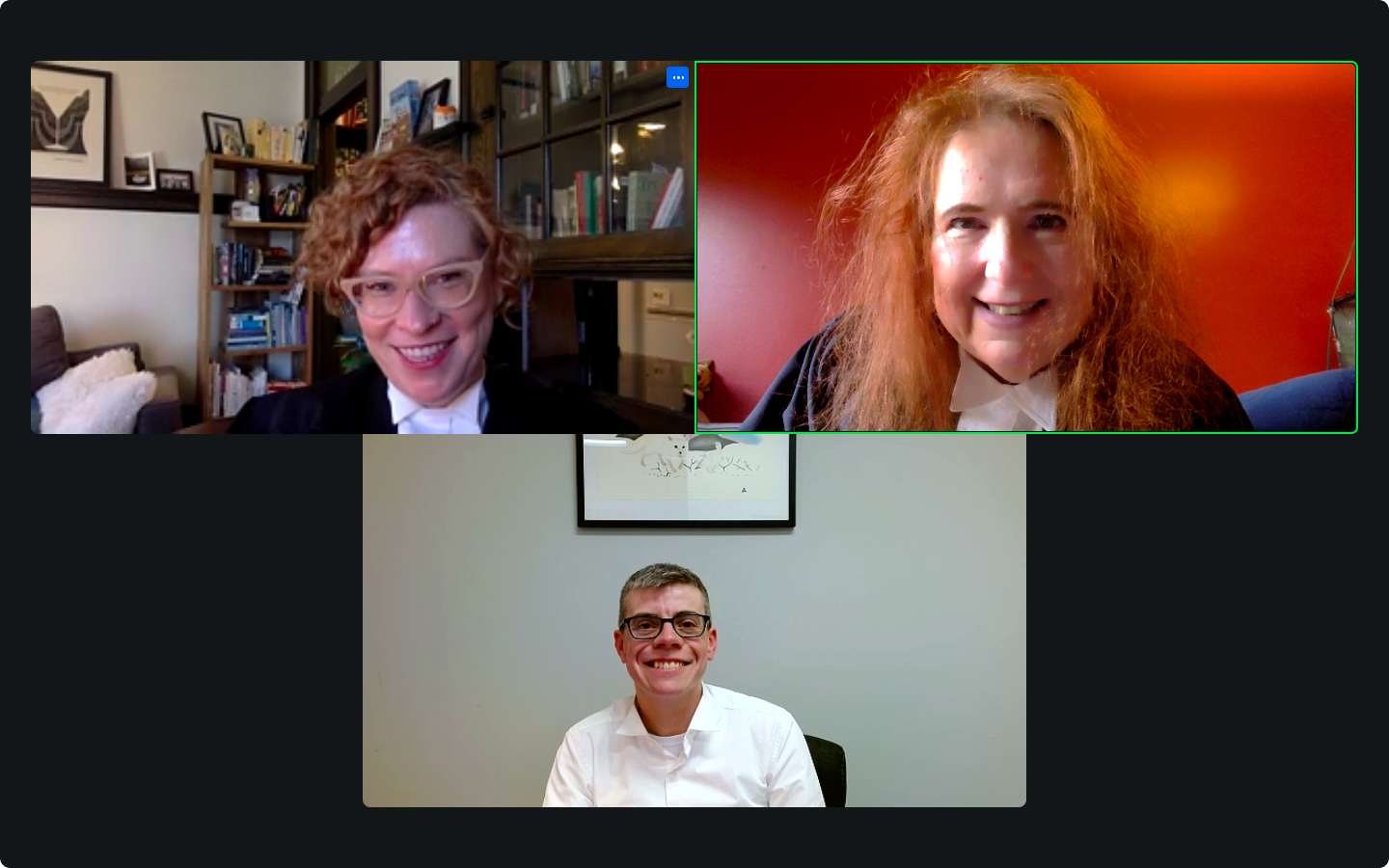
ARCHIVED WEBCAST OF THE JW HEARING DEC 3 – POSTED TO SCC WEBSITE DEC 20
The audio and video are wildly out of sync and the quality of the video is terrible so it’s no fun to watch
It’s probably better to just listen
We appear 2:21:50 but Carter is about 15 minutes before us or so
What I’ve mainly learned looking at this is that multi-chrome eye-shadow is a great idea if you’re a moving live human in real time but seriously less successful in its impact while you’re staying still.
Anita


 anitaszigeti
Pingback: 2024 BROUGHT ME TWO OF EVERYTHING, DOUBLE TROUBLE, DOUBLE THE FUN | anitaszigeti
Pingback: R v. J.W. Judgment Release (SCC) May 23 2025 | anitaszigeti