
On August 11 2022 I spoke with Jean-Philippe Nadeau of CBC Radio about this Judgment.
Here is the article about the case in French:
The English translation here and below is a Google translation and it clearly contains errors, some of them significant – so read with that caveat in mind.
Ontario Loses Appeal Against Former Penetanguishene Asylum Residents
This is a victory, according to the association Law and Mental Disorder, which defends people kept in institutions.
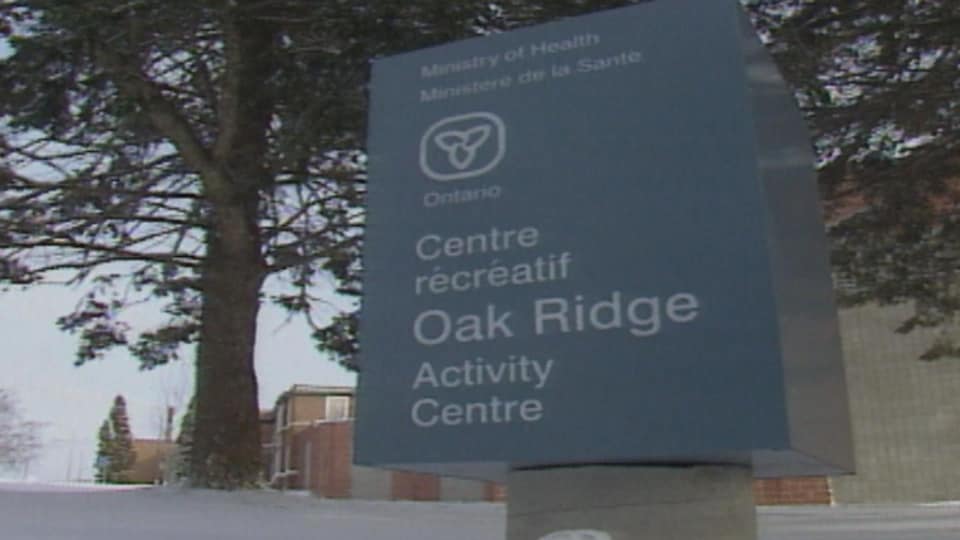
The Penetanguishine Mental Health Center replaced the Oak Ridge Asylum.
Photo: Radio Canada
Jean-Philippe Nadeau (accéder à la page de l’auteur)

Jean-Philippe Nadeau
Posted yesterday at 8:28 p.m.
The Ontario Court of Appeal recently upheld almost in its entirety the judgment of a lower court, which had compensated 28 former residents of the former Oak Ridge asylum in Penetanguishene for the abuse they suffered there from 1965 to 1983.
In their judgment of July 29, the three judges of the Court of Appeal ruled unanimously that the majority of the plaintiffs had indeed suffered acts of psychological and physical violence after their involuntary admission to the former maximum security asylum.
Read also :
Stripped, Drugged: A Damning Testimony Against the Former Asylum of Penetanguishene
At the time, the plaintiffs had been sent to Oak Ridge under Ontario’s Mental Health Act following remand warrants issued by courts or conventional penitentiaries.
Others had been found not guilty by reason of insanity
, a term once used to describe defendants found not criminally responsible for their crime.
The Court of Appeal found that Ontario and the doctors at the former asylum breached their fiduciary duty to all of the respondents except one who did not participate in any of the three controversial treatments.
The disputed therapies involved the injection of drugs like LSD, the solitary confinement of patients and their prolonged confinement in a capsule without the consent of the plaintiffs.
A first court had awarded them last year more than 9.5 million dollars following a lawsuit , which notably targeted two retired psychiatrists and the province, the former owner of the establishment.
The Court of Appeal therefore dismissed the government’s defense of the limitation period and the province’s contention that the law imposed no fiduciary duty on it to any of the respondents.
Fiduciary duty
In Canadian law, a fiduciary duty refers to a relationship in which one party (the fiduciary) is responsible for looking after the best interests of another party (the beneficiary).
It is a duty to act in the sole interest of the patient in a transparent and accountable manner, and not in the interest of the fiduciary for vile or sinister purposes or in any way to abuse or take advantage of the beneficiary
,” says Anita Szigeti, president of the Law and Mental Disorder Association.
Ontario prosecutors argued during the December 2021 appeal in Toronto that imposing such a duty would violate its duty to protect the public from dangerous offenders.

RD, who wishes to remain anonymous, is one of many plaintiffs in this civil lawsuit.
Photo: Radio-Canada / Francis Ferland
The only downside for the plaintiffs: the Court of Appeal found that the trial judge had erred in finding that the Oak Ridge doctors were responsible for the assaults against all the plaintiffs.
However, she acknowledges that 9 of the 28 patients to whom the doctors had directly administered drugs as part of the three therapies had indeed been beaten, causing them injuries.
The Court of Appeal therefore reduced the damages payable to certain plaintiffs, but confirmed the punitive damages awarded to 14 others.
Positive reactions
Never mind, attorney Anita Szigeti talks about a big payoff for patients who are detained in mental institutions for a crime for which they have been found not criminally responsible.
This is a monumental victory for the 28 complainants in question, but it is also an extremely important judgment for all people who have experienced mental health problems in prison or not
, she said.
Ms. Szigeti echoes the very words of the trial judge, who compared the treatment the plaintiffs had suffered in Oak Ridge to torture.
Their lives have been changed forever and those who have been released bear the scars of their emotional, physical and psychological wounds, and they no longer have faith in our justice system
,” she said.

Anita Szigeti is the president of the Law and Mental Disorder Association, which defends people with mental illness.
Photo: Radio-Canada / Martin Trainor
In his verdict, Ontario Superior Court Justice Ed Morgan wrote in June 2020 that the province and Drs. Gary Maier and Elliott Barker breached their fiduciary duties by subjecting their patients to the three experimental programs against their will. .
Ms. Szigeti is also pleased that the Court of Appeal rejected the province’s arguments, which maintained that psychiatrists did not have to act in the interests of prisoners, but rather in those of the public for security reasons. .

Dr. Gary Maier was one of two former Oak Ridge Asylum psychiatrists prosecuted in the case. (Archives)
Photo: Radio Canada
In the second part of the verdict, Judge Morgan awarded general and individual punitive damages in February 2021, which ranged from $1,000 to $2.7 million depending on the severity of the treatment the 28 plaintiffs endured during their internment.
“ This decision is encouraging, as it recognizes that physicians operating within publicly funded facilities face consequences and potential punitive damages when they fail to meet their obligations to patients. over which they have complete control. »
With such a decision, the lawyer recalls that the province, the establishments or the psychiatrists are henceforth punishable by law for any dubious psychiatric treatment which would be administered to patients without their consent, or even for assault and battery inflicted within the framework of their therapies.

Residents of Oak Ridge were stripped naked and confined to several in the “capsule” for days.
Photo: Radio Canada
Ms. Szigeti acknowledges that psychiatric treatments have changed over time since the early 1980s. And yet.
While electroconvulsive therapy is now authorized and used on a regular basis, I am not sure that Canadians know the extent of the psychotic therapies, brain surgeries or experimental treatments that are provided today in our psychiatric institutions.
, she continues.
In this sense, the recent judgment of the Court of Appeal still has the same relevance today according to the lawyer
Ms. Szigeti also ensures that the rights of patients are still violated in terms of their freedoms, even if the treatments to which they are subjected are now legal.
Solitary confinement, the use of restraints and the administration of sedatives are commonplace
, she said, adding that acts of a punitive nature perpetrated against patients often go unpunished.
Lack of vigilance
Ms Szigeti says the judgment is a step in the right direction, but it is insufficient, because internees are vulnerable and do not know their rights.
Admittedly, she recalls that there are administrative tribunals in the province such as the Ontario Review Board or the Consent and Capacity Board, but their power to enforce the law remains limited, according to her.
The lawyer adds that the province has made it mandatory to hold a coroner’s inquest when a patient dies in custody with body restraints, but the recommendations of juries are not always followed to the letter according to her.

The walls of the “capsule” had holes in which straws were inserted to allow the detainees to feed themselves with liquids only.
Photo: Radio Canada
Szigeti points out that the need for strong oversight is all the more pressing now that psychiatric facilities in Ontario have been divested and handed over to the complete control of the Ministry of Health.
She points out that Ontario therefore needs a psychiatric patient ombudsman or an independent advocate like the one that existed for children before the office was abolished during the first term of the Ford government.
We need an independent monitoring agency, because patients are too weak to defend themselves in court, and who is able to know what is happening in our psychiatric establishments
, she explains.
She recalls that institutionalized people are the most vulnerable in society and that they should be a priority for governments.
They are incarcerated behind closed doors, at the mercy of psychiatrists who have a lot of power, and where they are often placed in solitary confinement or immobilized with restraints with complete impunity
, she concludes.
Read also :
Dr. Maier refused to halt controversial treatments at Oak Ridge Asylum
In an email, the Ministry of the Attorney General of Ontario writes that the government is in the process of analyzing the judgment before deciding on another remedy before the courts.
The defense of the 28 plaintiffs did not respond to our interview requests.
Jean-Philippe Nadeau (go to the author’s page)
Jean-Philippe Nadeau


 anitaszigeti